
Home LVP installation
LVP that doesn't telegraph the old floor.
Luxury vinyl plank installation for homeowners and flooring companies across Greenville County. The plank is the easy part — the subfloor decides whether the job looks right in two years.
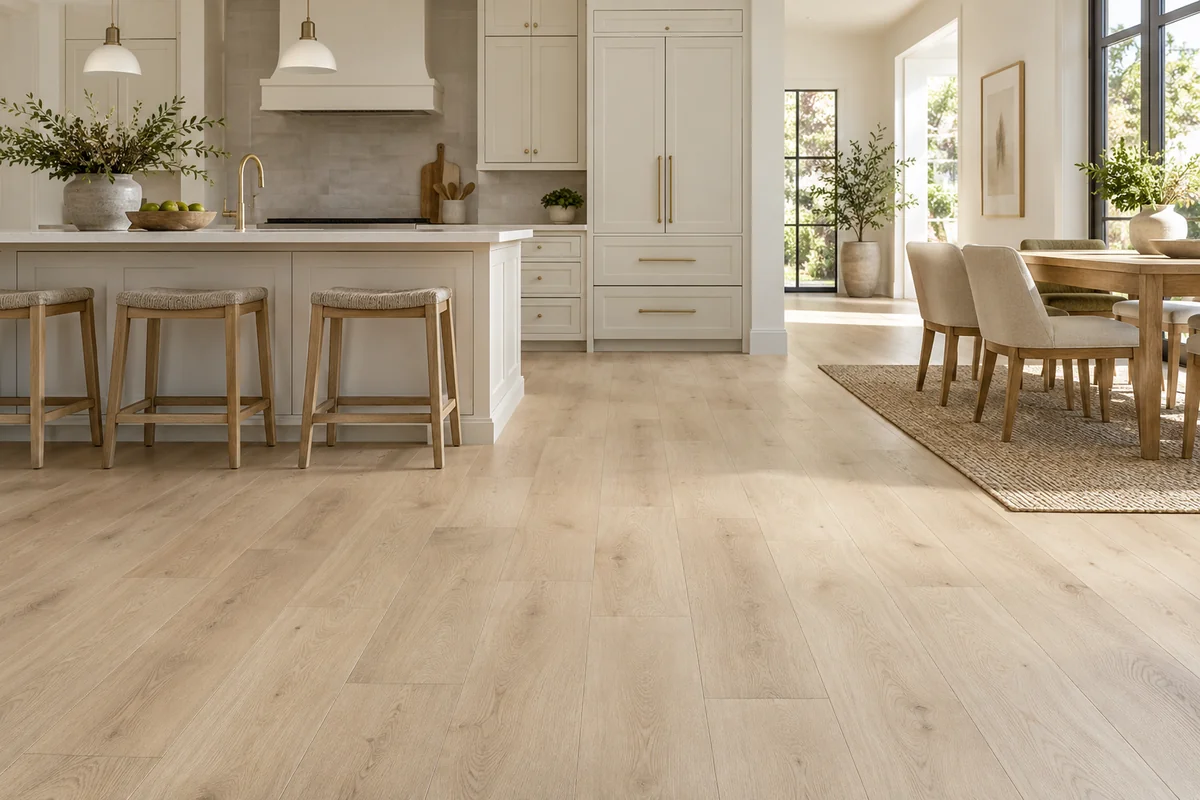 Illustrative
What it is
A new floor that goes over almost anything — carefully.
LVP is tough, waterproof and forgiving to live on, which is why it's in so many Upstate homes now. It is not forgiving about what's underneath it. Every hump, dip and soft spot in the subfloor shows through the finished floor as a wave you can see in raking light and feel underfoot. We check flatness and moisture before the first board goes down, and tell you what prep the room needs before it's part of a bill.
If someone quotes your LVP without looking at the subfloor, they're quoting a guess and you're carrying the risk.
This is the right call when
- Kitchens, baths, basements and anywhere water gets spilled
- Homes with kids, dogs and heavy daily traffic
- Rooms where carpet or old vinyl is coming out
- Rentals and flips that need a durable floor fast
- Flooring companies needing installation subcontracted
Look somewhere else when
- Solid hardwood you'd rather refinish — that floor has more life in it
- Floors with an unresolved moisture source underneath
- Structural subfloor problems, until those are repaired first
The sequence
How an LVP job runs.
Nothing here is exotic. It's just done in the right order, which is what separates a floor that lasts from a floor that clicks and lifts.
Measure and assess
Room by room square footage, layout, transitions, and a look at the existing floor and subfloor.
Flatness and moisture
Check for dips, humps, soft spots and moisture. Any prep needed is priced and agreed before install day.
Prep and remove
Old flooring out, subfloor prepped and cleaned, leveling done where the readings call for it.
Layout and install
Plank direction and starting course planned so seams and cuts land where they should, not wherever they happen to.
Trim and finish out
Transitions, thresholds and quarter round fitted, site cleaned, and a final walk with you.
What moves the price
What changes an LVP number.
Same floor, same house, different price — and here's where the difference actually comes from.
Square footage and layout
Open runs are efficient. Closets, angles, islands and doorways are where the cutting time goes.
Subfloor condition
Leveling compound, patching and old adhesive removal can outweigh the install itself.
What's coming out
Carpet and pad, old vinyl, tile, or nothing at all — plus haul-away.
Trim and transitions
Thresholds, stair nosing, quarter round, and how the new floor meets rooms you're not doing.
Furniture and occupancy
An empty house installs faster than a lived-in one, and that shows up in the labor.
Material and pattern
Plank size, wear layer, click versus glue down, and any pattern that increases waste.
Questions
LVP questions we get weekly.
Can LVP go over my existing floor?
Often yes — over tile, vinyl or wood that's sound and flat. Carpet always comes out. The deciding factor is flatness and moisture, not the material.
Will I feel the old floor through it?
You will if the subfloor wasn't flattened. That's the single most common complaint about LVP installs and it's a prep failure, not a product failure.
Is LVP actually waterproof?
The plank is. A floor is more than plank — standing water still finds seams, edges and whatever is underneath, so a leak is still a repair.
Can you install material I already bought?
Yes. Tell us the product and we'll follow the manufacturer's install detail for it, including expansion gaps and underlayment requirements.
Do you subcontract for flooring companies?
Yes. LVP installation by the square foot or by the job, your material and your spec. See the contractor section on the home page.
Next step
Send a photo.
Get a real number.
Two or three pictures of the floor, the rough square footage, and the room it's in. That's enough to tell you what the job actually involves before anyone quotes it.